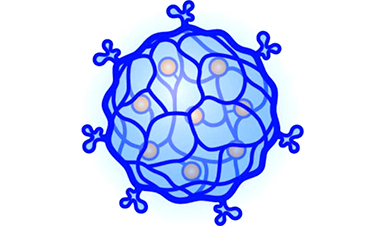
Current chemotherapy regimens slow cancer progression and save lives, but these powerful drugs affect both healthy and cancerous cells. Now, researchers reporting in ACS’ Nano Letters have designed DNA-based nanogels that only break down and release their chemotherapeutic contents within cancer cells, minimizing the impacts on normal ones and potentially eliminating painful and uncomfortable side effects.
Once ingested or injected, chemotherapy medications move throughout the body, indiscriminately affecting healthy cells along with those that are responsible for disease. Since many of these drugs are toxic to all cells, the desired tumor shrinkage can be accompanied by undesirable side effects, such as hair loss, gastrointestinal issues and fatigue. Nanogels made of DNA are one way that these drugs could be delivered, but they would still enter all cells. Tianhu Li, Teck-Peng Loh and colleagues reasoned that biomarkers—proteins or other components that are present in differing amounts in cancer cells and their healthy counterparts—could play a role in breaking down a nanogel, causing it to release its contents only in those that are cancerous. A biomarker called FEN1, a repair enzyme that cuts certain types of DNA, is present in larger amounts in cancer cells compared with healthy ones. The researchers wanted to see whether they could design a DNA nanogel that would specifically be degraded in cancer cells by FEN1.
To make DNA nanogels, the researchers used special DNA structures that FEN1 could recognize and cut. With cell-free systems, the researchers observed that the DNA-based nanogels were broken down by FEN1 but not by other DNA repair enzymes or compounds.
Top Image Credit: American Chemical Society
Post by Amanda Scott, NA CEO. Follow her on twitter @tantriclens
Thanks to Heinz V. Hoenen. Follow him on twitter: @HeinzVHoenen

News

Pope Leo Urges Global Response to Congo’s Deadliest Ebola Outbreak
Pope Leo called for international action to address the Ebola outbreak in the Democratic Republic of Congo. The epidemic has claimed over 2,500 lives and is the nation's largest recorded outbreak. The Pope emphasized [...]

Is there a summer COVID-19 surge this year? Yep, it’s ramping up again
Hantavirus. Ebola. West Nile. Measles. And, of course, cyclospora — that stomach parasite making people miserable across the country. Americans have plenty to worry about this summer. But remember COVID-19? It may not be [...]

Natural Compound in Broccoli Could Help Treat a Rare, Incurable Neurological Disease
Swinburne researchers have discovered how broccoli could help treat an extremely rare and incurable disease that affects only about 200 Australians. A naturally occurring compound in broccoli is being investigated as a possible treatment [...]
Antibody recycling, FcRn and the next generation of biologics
FcRn plays a central role in regulating the half-life of IgG antibodies and albumin, making it a critical target in both antibody engineering and autoimmune disease therapy. This article explores the biology of FcRn, [...]
Ebola kills 2,300 in three months with no vaccine available for Congo’s deadliest ever outbreak
It’s Congo’s 17th outbreak, with a toll that has eclipsed that of the country’s 2018-2020 outbreak when 2,299 deaths out of 3,481 cases were recorded. The latest data shows 101 new cases and 33 [...]
Beyond an Agency: How AI, Creativity and Commercialization Are Converging Into a New Growth Model
At a moment when AI is forcing a fundamental rethink of how work gets done, the life sciences industry is grappling with a deeper question: what role should human creativity play in an increasingly [...]

New $60 Blood Test Detects Lung Cancer Without Costly DNA Sequencing
A simple blood test that detects chemical changes in DNA identified more than 90% of stage 2-4 lung cancers in an early study, without relying on costly DNA sequencing. Researchers at Tel Aviv University and collaborating [...]
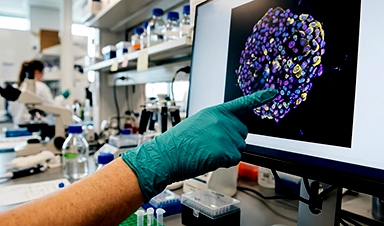
Reducing drug development failures with human-relevant models and AI
Professor Joseph C. Wu of Stanford University explains how stem cells, human-relevant models and AI are helping researchers predict which drug candidates are most likely to succeed before clinical trials. Researchers now have access [...]
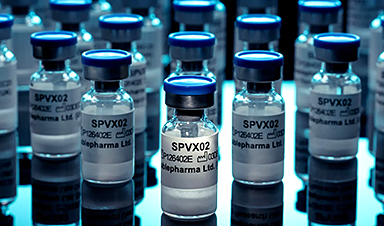
Half of vaccines are binned – ‘fridge-free’ versions could change that
Vaccines that do not need to be kept cool in a fridge have been successfully trialed in patients for the first time, say UK scientists. Currently, most vaccines need to be refrigerated or frozen [...]

Mushroom Mystery: The Fungus That Makes People See Tiny Humans
A mushroom sold in markets and served in restaurants in Southwest China has an unusual warning attached to it: cook it thoroughly, or you may start seeing tiny people. For decades, people have reported [...]

Artificial intelligence used to design brand new viruses
Artificial Intelligence has been used to design brand new viruses that are fully functional and can replicate in the laboratory, say US researchers. It is the first time whole genomes have been successfully designed [...]

Molecular Manufacturing: The Future of Nanomedicine – New book from NanoappsMedical Inc.
This book explores the revolutionary potential of atomically precise manufacturing technologies to transform global healthcare, as well as practically every other sector across society. This forward-thinking volume examines how envisaged Factory@Home systems might enable the cost-effective [...]

Moderna kicks off Phase I Ebola trial as Africa readies itself for research
If the Phase I trial is successful, Moderna plans to quickly initiate Phase II and Phase III trials of its Ebola vaccine. Moderna has initiated a Phase I trial of its mRNA Ebola vaccine [...]
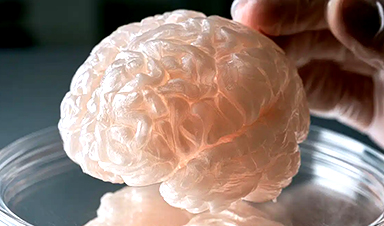
3D Human Brain Tissue Model Replicates Alzheimer’s Pathology
Summary: Researchers introduced a highly reproducible three-dimensional human brain tissue model capable of replicating complex neurodegenerative processes in Alzheimer’s disease. Developed over nine years using human stem cells, the self-organizing tissue spheroids integrate functional neurons, [...]
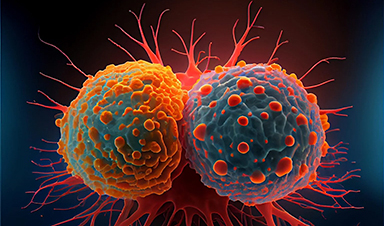
A Common Sugar May Loosen Cancer Cells and Help Them Spread
Chemotherapy may kill most ovarian cancer cells, but the few that survive can turn dangerously active. By releasing fructose, they may help nearby tumor cells break free and spread. Researchers at The Wistar Institute [...]
COVID-19 can wake up dormant viruses in the body, large study confirms
Virus reactivations by SARS-CoV-2 could worsen initial symptoms and increase risk of Long Covid. Early in the COVID-19 pandemic, scientists noticed that a SARS-CoV-2 infection can “wake up” other, dormant viruses already present in [...]