- New research shows the W boson—a tiny particle fundamental to the formation of our universe—is heavier than scientists expected.
- This discovery goes against the Standard Model of particle physics, the framework scientists use to make sense of all observable matter.
- The 400-person team carefully sifted through 10 years' worth of data from more than four million collisions in a Fermilab particle accelerator.
The W boson, one of the tiniest, most elementary particles in the known universe is causing a big ruckus in the field of particle physics.
New findings about the particle, which is fundamental to the formation of the universe, suggest its mass may be far heavier than predicted by the Standard Model of particle physics—the theoretical "rulebook" that helps us make sense of the building blocks of matter. If true, it could signal a monumental shift in our understanding of the universe.
According to the Standard Model, W bosons (together with another particle, called Z bosons) are responsible for the weak nuclear force, one of the four forces that hold together all observable matter in the universe. The other forces include gravitational force (for which there is currently no explanation in the Standard Model), electromagnetic force, and the strong nuclear force.
Gravitational and electromagnetic forces work across large scales. Think: the sun's hold over distant planets, or the journey light from far-off stars makes across the universe. Weak and strong nuclear forces, however, interact with the tiniest objects in our universe and occur only within the nuclei of atoms. (Coincidentally, these are the forces responsible for generating radioactivity.)
The weak nuclear force is particularly important. It is responsible for, among other things, the process through which the sun forms helium from hydrogen, and is critical to the formation of our universe. "If it wasn't for this force, none of the heavy elements beyond hydrogen would form," Ashutosh Kotwal, a physicist at Duke University and one of the leaders of the experiment, tells Popular Mechanics. "It is crucial to our existence."
Scientists first predicted the W boson in the 1960s, but it wasn't until 1983 that a team of researchers at CERN (the European Council for Nuclear Research) proved its existence. (Both teams won Nobel Prizes for their work on the particle.) Since then, research teams have sought to precisely identify the mass of the W boson, a critical measurement that acts as a key parameter for the rest of the Standard Model's framework.
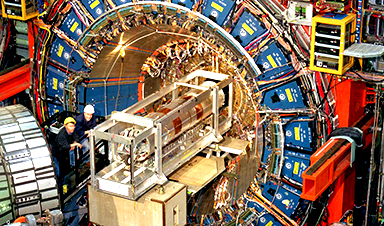
An international team of more than 400 researchers—collectively known as the Collider Detector at Fermilab Collaboration—worked together to analyze almost ten years of data collected from Fermilab's now-defunct Tevatron particle accelerator in Batavia, Illinois. And they have found something peculiar: the W boson mass measurement they report in their new paper, published today in the journal Science, is approximately 0.1 percent heavier than previous estimates.
The researchers were able to measure the mass of the W boson by smashing beams of protons and antiprotons together in a vacuum. These collisions generate a slew of different particles, but rarely produce a W boson. "We are not able to measure the W boson directly, in a sense, because it decays incredibly fast—in something like a trillionth of a trillionth of a second," Kotwal explains.
So, the team must analyze the remnants of the W boson, the particles it leaves behind in its wake. But only certain combinations of leftover particles can give scientists the data they need. In particular, Kotwal and his colleagues sought out collisions that produced two specific pairs of particles: either a muon and a neutrino, or an electron and a neutrino. (Muons, you may know, are the much, much heavier subatomic cousins of electrons. Neutrinos, affectionately known as ghost particles, are electrically neutral and have an impossibly small mass. An electron is, well, an electron.) By measuring the position and energy of these particle pairs, the team was able to determine the mass of the decayed W boson.
It's an incredibly difficult task, though. Out of the roughly 450 trillion collisions that the team observed between 2002 and 2011, only about four million collisions generated enough high-quality data about the W boson.
From this data, they estimate the new mass measurement of the W boson to be 80,433.5 ± 9.4 MeV/c2—a far-cry (in the realm of quantum mechanics, that is) from previous measurements, and from what the Standard Model suggests it should be. It is the most precise measurement recorded yet, the team reports, roughly twice as precise as previous calculations. David Toback, a physicist at Texas A&M University and a co-spokesperson for the 400-person team, likens it to precisely measuring the weight of an 800-pound gorilla to within one ounce.
Now, it's up to the scientific community to figure out exactly what these findings mean. It could mean, for instance, that there are previously undiscovered particles waiting to be discovered, or physical interactions entirely new to science. "It's remarkable how resistant nature is to revealing her secrets," Toback tells Popular Mechanics. "It's a wonderful chase, but it's absolutely maddening."
The next step, of course, will be to perform even more experiments and get confirmation of this measurement from an independent source. Toback is hopeful that the CMS and ATLAS experiments at CERNS's Large Hadron Collider in Geneva, Switzerland—each of which rely on the participation of thousands of scientists—will provide even more data in the near future, and, if we're lucky, some new insight.

News
This Deadly Disease Was Wiping Out Humans 5,500 Years Ago
A new study suggests plague was already a deadly threat 5,500 years ago, striking small hunter-gatherer communities long before cities and agriculture emerged. For centuries, plague has been remembered as the disease that devastated [...]

China closing in but US leads in biotech quality, commercial reach, survey finds
SAN DIEGO, June 22 (Reuters) - China, which now conducts more clinical drug trials, opens new tab than the U.S., still lags in the quality and commercial reach of its biomedical science, according to a recent survey, opens new [...]
New method generates renewable supply of progenitor immune cells
In a paper published in Cell, a USC Stem Cell-led team reports a new way of generating a renewable and expandable supply of the progenitor cells that give rise to macrophages. These immune cells help [...]
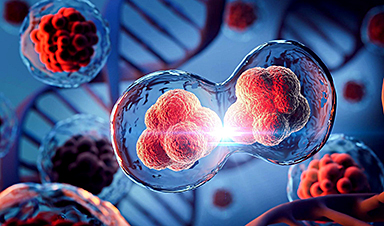
Scientists Just Discovered a Cellular Survival System That Was Never Supposed To Exist
A surprising backup pathway allows cells to make a crucial amino acid when their primary machinery fails. For decades, biologists believed cells had only one way to access a molecule they cannot live without. New [...]
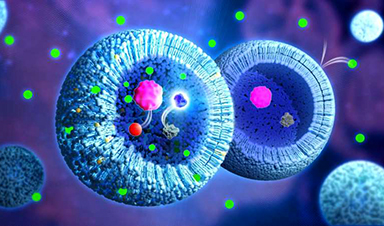
Artificial cells gain porous membranes, enabling lab reactions and drug release
Artificial cells created in the laboratory offer a wide range of potential applications. Until now, however, their membranes—unlike those of real cells—have been virtually impermeable. Researchers at the Max Planck Institute for Polymer Research, [...]
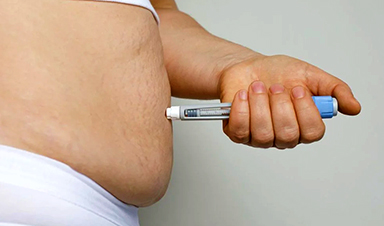
Popular Weight-Loss Drugs Like Ozempic Linked to Lower Breast Cancer Risk
Ozempic and similar weight-loss drugs were linked to a striking 30% reduction in breast cancer risk in a study of more than 110,000 women. Popular weight-loss and diabetes medications such as Ozempic, Wegovy, Mounjaro, [...]

Stanford Scientists Discover Explosive New Type of Immune Cell
Scientists studying the remarkable regenerative abilities of planarian flatworms have uncovered a previously unknown type of immune cell with an unusually destructive defense strategy. What if an immune cell could wipe out nearby threats [...]

Big Pharma-backed SonoThera sounds off with $125M series B for bubble-based genetic delivery
Bay Area biotech SonoThera is bubbling to a clinical boil after raising a $125 million series B with the backing of some of the biggest names in pharma. Vida Ventures led the raise, with the venture [...]

Joint initiative of 5 EU countries calls for ‘unified approach’ to pharma framework amid US drug pricing pressure
With drug pricing pressure building from the U.S., a healthcare-focused consortium of five European countries is calling for a “unified approach” to strengthen Europe’s pharmaceutical framework and access to innovative medicines. Belgium, the Netherlands, [...]
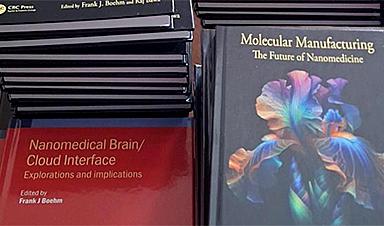
Our books now available worldwide!
Online Sellers other than Amazon, Routledge, and IOPP Indigo Global Health Care Equivalency in the Age of Nanotechnology, Nanomedicine and Artifcial Intelligence Global Health Care Equivalency In The Age Of Nanotechnology, Nanomedicine And Artificial [...]
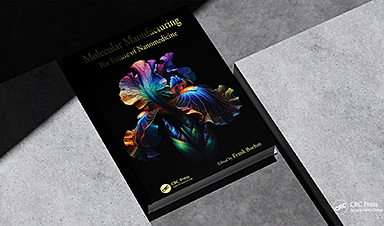
Molecular Manufacturing: The Future of Nanomedicine – New book from NanoappsMedical Inc.
This book explores the revolutionary potential of atomically precise manufacturing technologies to transform global healthcare, as well as practically every other sector across society. This forward-thinking volume examines how envisaged Factory@Home systems might enable the cost-effective [...]
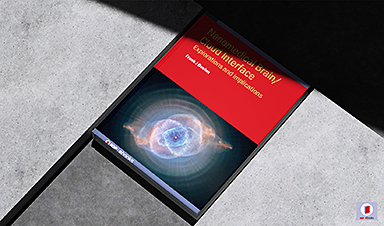
NanoMedical Brain/Cloud Interface – Explorations and Implications. A new book from Frank Boehm
New book from Frank Boehm, NanoappsMedical Inc Founder: This book explores the future hypothetical possibility that the cerebral cortex of the human brain might be seamlessly, safely, and securely connected with the Cloud via [...]
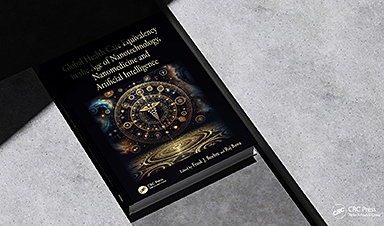
New book from Nanoappsmedical Inc. – Global Health Care Equivalency
A new book by Frank Boehm, NanoappsMedical Inc. Founder. This groundbreaking volume explores the vision of a Global Health Care Equivalency (GHCE) system powered by artificial intelligence and quantum computing technologies, operating on secure [...]
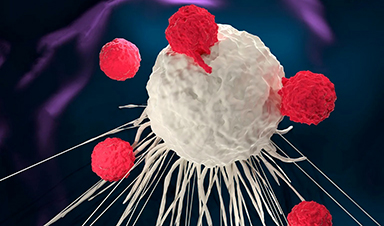
UCLA Scientists Uncover a “Hidden Weakness” in Some of the World’s Deadliest Cancers
A new study has uncovered an unexpected vulnerability in some of the deadliest cancers. Researchers at UCLA have identified a previously hidden weakness in some of the most aggressive cancers, pointing to a possible new way [...]
AI-designed universal coronavirus vaccine clears first human trial
Key Takeaways Super-Antigen Technology: Uses AI and machine learning to analyze viral genomes, creating a single vaccine that targets essential features across entire virus families, including coronaviruses and Ebola. Human Trials & Safety: Phase [...]

Researchers Discover a Hidden Vitamin D Problem That Persists Year-Round
A new study suggests that some groups may not experience the expected seasonal boost in vitamin D levels, even during the sunniest months of the year. Many people assume that spending more time outdoors [...]